
Being an extreme night owl isn’t a character flaw - it’s in the genes
I've been a night owl for as long as I can remember. As I got older, mornings became obsolete and nights became my calling.
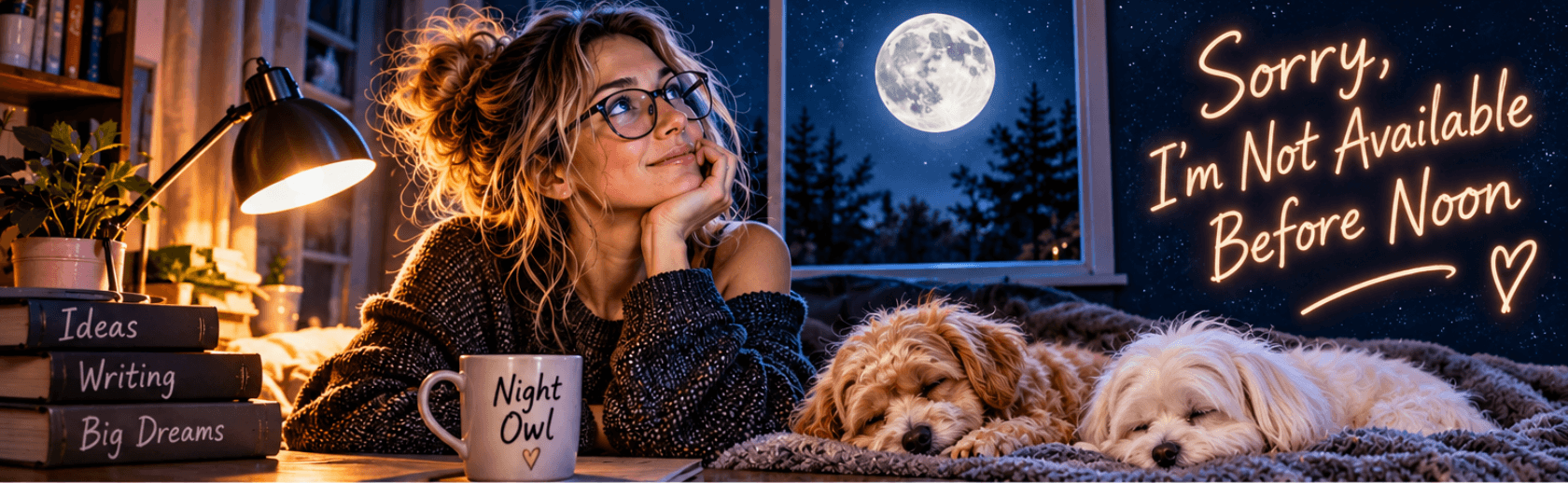
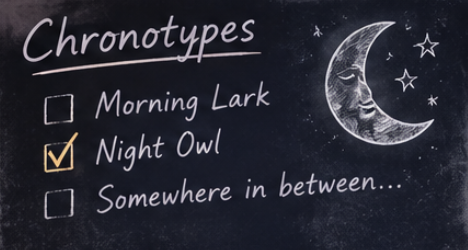
I must admit, my extreme night owl tendencies became more pronounced during Covid and continued to worsen after I was diagnosed with Long Covid. I would go to sleep anywhere between 2am and 5am. Those 2ams gradually turned into 3ams, 4ams and sometimes even 6am. I did a mental health DNA test with my psychiatrist, which indicated that I'm genetically predisposed to being a night owl. I had no idea genetics could play a role. I'd always assumed I simply preferred nights to early mornings and happened to be more productive after midnight. Little did I know that there were different chronotypes. I sometimes felt slightly out of place, but when I started reading more about sleep and biology, I felt a little less like an alien.
The world now operates digitally and globally, 24/7. Judging someone for being more productive at different times of the day seems rather outdated. Early birds are often described as motivated, dedicated and ambitious, up with the sun, whereas night owls are labelled lazy, party animals or unmotivated (even if they've spent the entire night working, reading or writing). I’m not lazy, I just happen to feel driven and inspired at distinct times. The idea of going to the gym early morning kills me, I’d much rather go at 1am than 6am, when I’m still wide awake. Writing an article during the day when I’m constantly being disturbed doesn’t go too well with a creative flow. I am chronically fatigued, I do currently need to sleep more than usual, I have my reasons, I do realise I’m living upside down in a rather closed-minded world. I can't change my genetics or simply override my biology, although I've tried many times. It would be like expecting a morning person to be cheerful and productive at 2am.
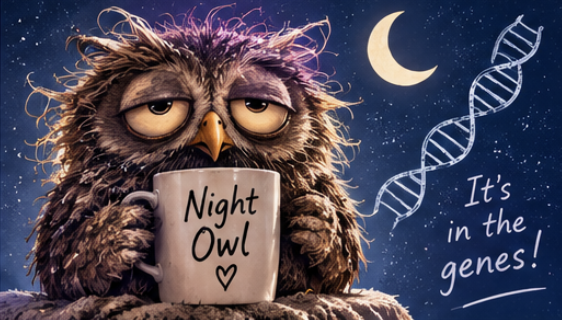
What bothers me, though, is that early birds are rarely judged. They can go to sleep as early as 8pm, wake up at 5.30am and it's almost celebrated. Nobody bats an eyelid. But us mere night owls, who go to sleep around 4am or 5am and wake up in the afternoon, are accused of sleeping our lives away. Is this because society dictates when we should be going to sleep and waking up? Yes, I’ll admit, I am on the extreme nighthawk schedule, I don’t even party anymore. I like the peace and quiet of the night. I can get so much more done, especially with creative projects. There are fewer interruptions, if any, and my brain is just much sharper.
I came across an interesting article in The Guardian from 31st May 2020, titled Extreme night owls: ‘I can’t tell anyone what time I go to bed’. I related to this article, which gives the figure of 8.2% of the population being extreme night owls. It describes them as people whose natural inclination is to fall asleep well after midnight. I hate telling people what time I got to sleep, and I hate it even more telling anyone what time I wake up. I can feel the judgements crawling on my skin!
I also came across another fascinating article in The Guardian titled Sleeping late isn't a sign of laziness. Stop the circadian-rhythm shaming by Matthew Cantor in January 2023. The article discusses how sleeping late isn't necessarily a lifestyle choice, a sign of laziness or a lack of discipline, and emphasises the importance of recognising that people have different natural circadian rhythms.
In my experience, people mistake a biological difference for a personal failing. In the eyes of others, I'm somehow failing simply because I don't stick to a conventional schedule. Writing, designing jewellery for SHEEVA London, anything work related is something I prefer to do at night, it’s when I feel most inspired. The majority of The Cupid Index was written past midnight! Even my teacup puppy work is most active in the early hours of the day, particularly when working with Korea and the US.
When I worked 9–6pm, it took me a good few hours to fully wake up. I was an absolute zombie until around midday. We aren't all born to be morning larks or to work 9–5 jobs. Yes, it's more the norm, but if you search articles on chronotypes, you'll see that we don't all thrive on the same clock.
I used to be late to school every single day for seven years, the alarm would go off, but I simply couldn't get myself out of bed. Tennis matches, however, were an entirely different story. It's not that I disliked school, if anything, I was quite the nerd, I just had trouble adhering to strict rules, and the extra sleep was rather nice, particularly on those cold, wintry mornings.
Back to late nights. It's currently 2am as I write this. The notifications stopped some hours ago, expectations have paused until tomorrow (although it's still today for me), and this is usually when my creative focus peaks. Ok, I don’t get as much sunlight in autumn and winter as I do in spring and summer, I hibernate and become even more of a vampire.
I have a naturally delayed sleep schedule, but I also live with chronic fatigue and unrefreshing sleep associated with Long Covid and fibromyalgia.
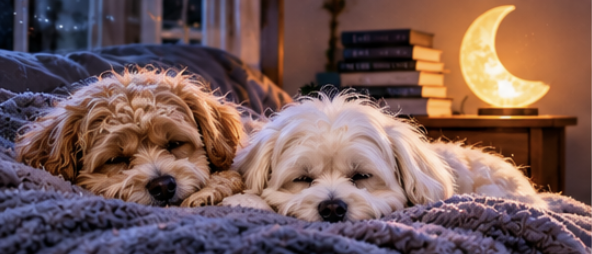
In an ideal world, I'd love to fall asleep around 2am or 3am and wake up around 11am, or midday at the latest, feeling refreshed. I don't live in an ideal world and never have done. For now, I'm also very much enjoying my me time: the tranquillity, writing my article with my dogs sleeping beside me. I just wish I knew more fellow night owls, so I felt a little less misplaced in the world. If you're one of them, please reach out!
It’s 3:40am now, the birds will be singing soon, and the early birds will be up and about. Time to go study some Italian on Duolingo, catch up on Tiktok and go to sleep. Goodnight!